
Tata Steel, Bajaj Finance, Mahindra & Mahindra, JSW Steel, NTPC, Adani Ports, Bajaj Finserv and Larsen & Toubro were also among the laggards. However, Power Grid, HCL Technologies, Infosys, Tech Mahindra, Tata Consultancy Services and ICICI Bank were among the gainers.

From the 30-share blue-chip pack, Adani Ports jumped over 5 per cent. NTPC, Tata Steel, Bajaj Finserv, Zomato, Bajaj Finance, Tata Motors, State Bank of India, IndusInd Bank and Maruti were among the other big gainers. From the 30-share pack, Hindustan Unilever, Titan, Tata Consultancy Services, Infosys and UltraTech Cement were the other laggards.

'Allocate up to 20 per cent of your core equity portfolio to quality funds.'

'The market's sharp decline recently has shaken the confidence of retail investors, leading to increased selling.'

Data from Amfi shows that NAV of every one in two BAFs declined 1.5% or less on Monday compared to a 3.13% decline in Nifty 500.

'A 20 per cent equity allocation to ESG funds is a good start.' 'As more evidence on ESG performance builds, investors may increase allocations.'

From the 30 Sensex firms, Power Grid, ICICI Bank, Bharti Airtel, HDFC Bank, Kotak Mahindra Bank, Larsen & Toubro, Adani Ports and UltraTech Cement were among the laggards. Sun Pharma, Reliance Industries, Titan, HCL Technologies and Bajaj Finserv were among the biggest gainers.

The global COVID-19 situation, rollout of vaccines, geopolitical trends, Union Budget and economic recovery would be the major factors driving investor sentiments in 2021 after a tumultuous year which saw both 'the worst of times and the best of times' for the stock market, said analysts. What a year 2020 turned out to be! From witnessing gigantic losses to record-shattering gains, investors went on a roller-coaster ride amid the coronavirus pandemic and massive stimulus measures. Markets closed 2020 with remarkable gains of around 16 per cent, but will the winning ways continue in 2021 as well?

Stock markets closed lower for the second straight day on Friday amid relentless foreign fund outflows and losses in blue-chip stocks Reliance Industries, ICICI Bank and State Bank of India. Benchmark BSE Sensex declined by 55.47 points or 0.07 per cent to settle at 79,486.32. During the day, it tanked 424.42 points or 0.53 per cent to 79,117.37.

Investors' wealth plummeted by Rs 5.49 lakh crore on Friday as markets faced a massive correction tracking a weak trend in global peers and fresh foreign fund outflows. Falling for the third day running, the 30-share BSE Sensex tumbled 1,017.23 points or 1.24 per cent to settle at 81,183.93. During the day, it plunged 1,219.23 points or 1.48 per cent to 80,981.93.

New investors should gradually build a 5 to 10 per cent allocation to gold.

Benchmark equity indices Sensex and Nifty pared early gains to settle lower on Wednesday due to late selling in index major Reliance Industries, ITC and HDFC Bank even as the RBI took the first step towards a rate cut in its monetary policy review. Erasing its early gains, the 30-share BSE Sensex fell 167.71 points or 0.21 per cent to close at 81,467.1. During the day, it surged 684.4 points or 0.83 per cent to hit an intra-day high of 82,319.21.

Equity-focused schemes may perform better in a bull market, while debt-oriented ones may offer greater stability during volatile periods.
Among the Sensex firms, Titan, Asian Paints, ITC, Hindustan Unilever, Nestle India, Bajaj Finserv and Bharti Airtel were among the gainers. In contrast, UltraTech Cement, Tech Mahindra, Tata Steel, Power Grid, HDFC Bank, HCL Technology, State Bank of India and ICICI Bank were the laggards.

Movement in the stock market this week will largely be driven by global trends, macroeconomic data announcements and trading activity of foreign investors, analysts said. Equity benchmark indices, which are on a dream run for the past several days, will also track trading in global oil benchmark Brent crude and movement of rupee against the US dollar. "The next FOMC (Federal Open Market Committee) meeting is scheduled for mid-September, but before that, the market will be closely watching upcoming US economic data.

The growth was primarily driven by domestic investments, which accounted for 60 per cent of the total inflows during the first quarter of the financial year.

'Regardless of whether you invest Rs 100 or Rs 1 crore per month, risk is inevitable.' 'Positive returns at the end of the year can never be guaranteed.' 'This is a fundamental truth every SIP investor must grasp.'

Most of the Sensex firms settled in the positive territory. Mahindra & Mahindra, Tata Motors, Tech Mahindra, JSW Steel, State Bank of India, HCL Technologies, Reliance Industries and Infosys were the biggest gainers. Kotak Mahindra Bank and Maruti were the laggards.

2023 could be another volatile year for Indian equity markets, according to BofA. In a report, the brokerage pointed out that the Nifty50, at present, is trading at 20.7x against its long-term average of 18.8x one-year forward earnings of current Nifty constituents. Plus, India is trading at a 98 per cent premium to its emerging market (EM) peers against its long-term average of 45 per cent.
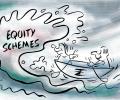
Undeterred by the stock market volatility, uncertainty due to the Ukraine-Russia war and high inflation, equity mutual funds continue to remain attractive choice for investors for the 15th straight month, registering a net inflow of Rs 18,529 crore in May on robust SIP numbers. This was higher than Rs 15,890 crore net inflow in April, data from the Association of Mutual Funds in India (AMFI) showed on Thursday. Equity schemes have been witnessing net inflow since March 2021, highlighting the positive sentiment among investors.

Shares of Hyundai Motor India Ltd, the Indian arm of South Korean automaker Hyundai, on Tuesday made a muted market debut and further fell by nearly 6 per cent against the issue price of Rs 1,960. The stock listed at Rs 1,931, reflecting a decline of 1.47 per cent from the issue price on the BSE. Later, the stock made some recovery and hit a high of Rs 1,968.80, up 0.44 per cent.

Among the 30 Sensex firms, Bajaj Finance, Infosys, Adani Ports, JSW Steel, HCL Tech, Bharti Airtel, IndusInd Bank and Tata Motors were the biggest laggards. ICICI Bank, Bajaj Finserv, Titan, Nestle and HDFC Bank were among the gainers.

Among the 30-share Sensex blue-chip pack, Bharti Airtel, ITC, Kotak Mahindra Bank, Hindustan Unilever, Titan, UltraTech Cement, HCL Technologies, and Power Grid, were the biggest gainers. Tata Steel, IndusInd Bank, JSW Steel and Bajaj Finserv were the laggards.

Among the 30 Sensex firms, Mahindra & Mahindra, IndusInd Bank, Bharti Airtel, Axis Bank, Tata Motors and ICICI Bank were the biggest laggards. In contrast, Tata Steel, Tata Consultancy Services, NTPC, JSW Steel, Asian Paints and Reliance Industries were gainers.

Equity investors became richer by Rs 5.66 lakh crore as markets bounced back sharply on Tuesday following a recovery in global equities. The 30-share BSE Sensex jumped 1,276.66 points or 2.25 per cent to settle at 58,065.47 points. During the day, it zoomed 1,311.13 points or 2.30 per cent to 58,099.94 points. The market capitalisation of BSE-listed firms climbed Rs 566,318.84 crore to Rs 273,92,739.78 crore.
Adani Ports was the biggest loser in the Sensex pack, declining 1.37 per cent, followed by ITC, Bharti Airtel, NTPC, Maruti, Asian Paints, Sun Pharma, Power Grid, Hindustan Unilever and Larsen & Toubro. In contrast, Bajaj Finserv, Bajaj Finance, IndusInd Bank, Tata Steel, Axis Bank and Tech Mahindra were among the gainers.
From the 30 Sensex firms, Tata Consultancy Services and HCL Technologies dropped over 3 per cent each. Infosys, Tech Mahindra, Sun Pharma and Tata Motors were the other major laggards. Bajaj Finance, Bajaj Finserv, Nestle, HDFC Bank, ICICI Bank and State Bank of India were among the biggest gainers.
Macroeconomic data announcements, the last batch of Q1 earnings and global trends are the major factors that would influence trading sentiments in the equity market in a holiday-shortened week ahead, analysts said. Besides, trading activity of foreign investors would also be a crucial factor in dictating movement in the market. Equity markets would remain closed on Thursday for Independence Day.

With the earnings season drawing to a close, stock markets will take cues from global trends and foreign investors' trading activity this week, analysts said. The US FOMC (Federal Open Market Committee) minutes will be the major highlight this week, experts said. "This week, there are fewer cues on the macro and micro fronts, as the Q1 earnings season has concluded.

From the 30 Sensex firms, Mahindra & Mahindra, Infosys, Kotak Mahindra Bank, JSW Steel, Adani Ports, Tata Motors, Adani Ports, ITC and Titan were the major laggards. HDFC Bank, Bharti Airtel, Reliance Industries, Asian Paints and State Bank of India were the gainers.

From the 30 Sensex firms, Larsen & Toubro, Reliance Industries, Axis Bank, Asian Paints, Tata Motors, Bajaj Finance, Maruti, Bajaj Finserv, Kotak Mahindra Bank, Titan, Adani Ports and HDFC Bank were the major laggards. JSW Steel emerged as the only gainer.

The sharp pullback in mid and smallcap stocks signals a cooling-off period in segments that previously attracted considerable investor interest.

The cash pile within smallcap mutual fund (MF) schemes has grown over the past few months amid a relentless rally in stocks in this space. While fund managers usually don't make cash calls, incessant inflows and valuation discomfort have forced their hand. At the end of January, the top 10 schemes had over Rs 12,160 crore in cash, compared to Rs 8,700 crore in August 2023.
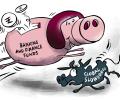
Companies in the banking, finance sector and insurance (BFSI) sector have underperformed on the bourses despite leading the earnings growth charts in the post-pandemic period. This has created a dichotomy between their earnings and share prices. BFSI companies have never been less expensive than the rest of the equity market.
Global factors and FII activity will dictate trends in domestic equity markets this week while assembly poll results of Maharashtra and Jharkhand may impact stocks on Monday, say analysts. Stock markets witnessed a spirited recovery on Friday with benchmark Sensex and Nifty notching the best single-day gains in more than five months and offering relief after weeks of correction.

From the 30-share Sensex pack, Tata Consultancy Services and Infosys jumped over 4 per cent each. HCL Technologies, Tech Mahindra, Adani Ports, Larsen & Toubro, Maruti and Reliance Industries were also among big gainers. Titan, IndusInd Bank, Hindustan Unilever, Axis Bank and HDFC Bank were the laggards.

Quarterly earnings of corporates, trading activity of foreign investors and inflation data are the key factors that are expected to drive the momentum in the equity markets this week, analysts said.
From the 30 Sensex firms, NTPC, Nestle, Titan, Kotak Mahindra Bank, Maruti, Hindustan Unilever, Bharti Airtel and HDFC Bank were the biggest gainers. HCL Technologies, Tata Consultancy Services, Adani Ports, Larsen & Toubro, JSW Steel, State Bank of India, Tech Mahindra and Bajaj Finance were among the laggards from the pack.
Investors' wealth eroded by Rs 9.51 lakh crore on Monday morning, following a crash in equity markets where the benchmark Sensex tanked over 2,400 points, mirroring a sharp plunge in global peers. The 30-share BSE benchmark tanked 2,401.49 points to 78,580.46 in early trade. Following the sharp decline in equities, the market capitalisation of BSE-listed firms dropped by Rs 9,51,771.37 crore to Rs 4,47,65,174.76 crore ($5.35 trillion) during the morning trade.

'Gyanendra back on the throne would be bad news for the Nepali people. He may not have learnt from his experience, but we have.'
